One road travel is simple. Pick a local road, and follow it.
This style of travel has very little planning involved, but much of the enjoyment comes out of appreciating places that most people tend to overlook. Routes are built to move people from one town to the another, but what is located in between a route’s start and end houses unique views that those focused on a destination don’t get to appreciate. It’s those local farms and family homes, lakeside vistas through small towns, and long-forgotten structures reclaimed by nature. It’s the things you never see on major interstates filled with billboards and chain restaurants. For people who may be looking for it, it’s a whole new sense of adventure.
In order to fully appreciate each road for what it is, you’ll have to stop and take a moment to take it all in. In this pilot blog post, I’d like to share some of my personal favorite things to look out for when traveling a single road.
Tips & Tricks to One-Road Travel
My biggest tip for one road travel is this: Don’t be afraid to get out of the car and walk around a little bit. Usually, small towns you come across can have public parks or commons with walking paths through them that lead to unique local viewpoints. These can also be great chances to chat with locals and learn more about the place you’ve found yourself in.

Here’s a small bridge on Center Street in Newport, Maine I visited a few months back. A walking trail through Riverwalk Park led me to this beautiful residential road, which otherwise I’d likely never have found by staying on the main road.
One of the most important things to look for, especially for getting out of the car and walking around, is public land. Public parks and town commons are some of the best places to find scenery, both in and outside of New England’s cities. As long as you’re off of interstates, small gravel patches on the side of the road or pull-offs commonly found before bridges are always a fine place to park to get out for a picture. Trails for hiking, snowmobiling and ATV travel are great chances to get out and find views nearby the road, especially when said trail follows the road itself.
One of my favorite public places to stop and explore is one you might not think of immediately: Cemeteries. These land plots are always open, and, especially in rural areas, completely void of people. Many small cemeteries are also built in locations with a great view of the local scenery, such as atop a hill or near the side of a lake or river. Some may see it as odd or even disrespectful to use resting places as a scenic viewpoint, but my argument is of the complete opposite. By visiting these largely forgotten gravesites and appreciating the landscapes in which they are situated, you are in turn giving appreciation to the place in which those who’ve passed have lived and allowing their experiences to, in a sense, live on. As long as you’re doing so with respect in mind, exploring small roadside cemeteries can be some of the most interesting and memorable parts of your journey.

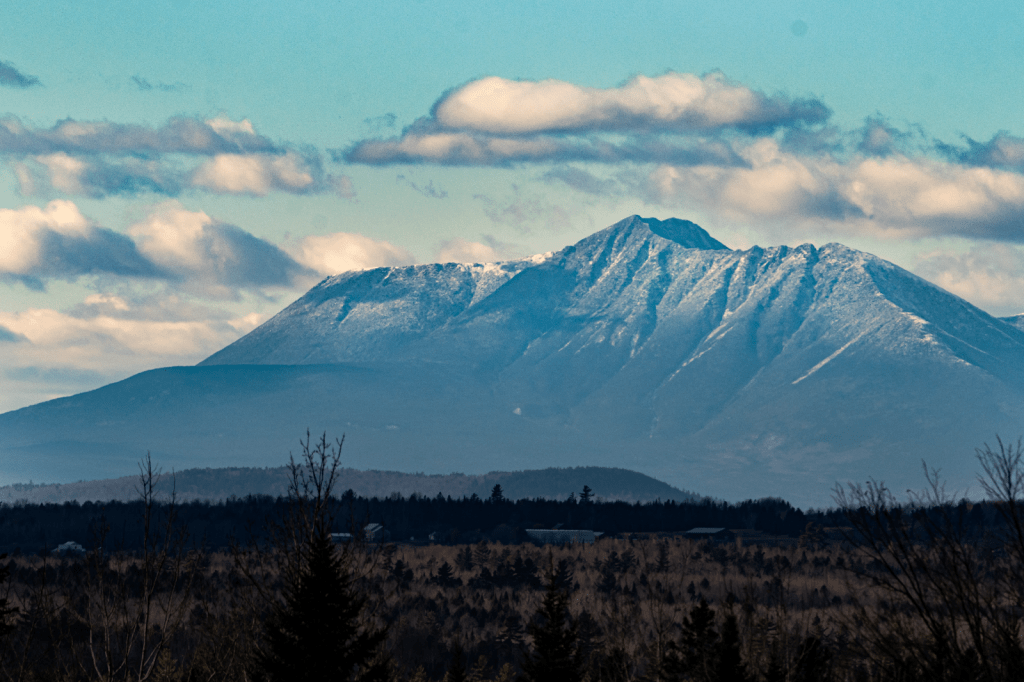
This image of the majestic Mount Katahdin is perhaps one of my favorite photos I’ve ever taken. But I didn’t take this photo anywhere near Baxter State Park, where the peak is located; I took this from a small hilltop cemetery in the village of Silver Ridge, nearly 30 miles away.
Public boat launches are another one of the best things to look out for when you’re traveling down a route looking for unique places to stop. Some New England states, including Maine and Rhode Island, actually mark out these launches via a sign on the nearest route. The necessity of these marked boat launches started for economic reasons, as it was important for states to mark out locations for local fishermen to launch from that weren’t owned solely by private companies (as described by the University of Rhode Island). An extra benefit of these launches, and what we’re after in one-road travel, is the fact that they allow for public access to lakes and beaches that are likely to be forgotten otherwise. So whether or not you’re traveling with a boat at the ready, these launches are always a good place to stop for a scenic view.

In Maine, public boat launches are marked with blue access signs like this one on the Penobscot River. Since they are maintained by the individual town they’re located in, they will always include the name of said town just below the boat insignia.
A Concluding Thought
No matter how many tips I can give, the most important part of your journey is to find and appreciate the sights interesting to you. If you see something interesting on the road, and no one else is around, don’t hesitate to pull over for a minute and take a closer look. No road is the same. Every town you pass through, every view you see, every acre of land on that road is unique to itself. The most important part of the journey is to find those unique places and find a way to appreciate them yourself. Exploration is an adventure.
 One Road
Leave a comment